Locksmith Guide
Locked Out of Your House? What to Do (and What Not to Do)
By Kenny, owner and locksmith at Open-in Security Services, Ickenham, working the same West London patch since 2006.
Published
The Short Answer
If you are locked out of your house, check every door and window from outside, ask whether a neighbour, landlord or letting agent holds a key, then call a local locksmith rather than forcing the door. Around 95% of lockouts are opened by picking or bypassing the lock with no damage. Open-in Security Services opens doors across West London from £85 by day and £110 at night, with no call-out fee, and asks for proof of residence once inside.
Need it sorted, not read?
Ask about locked out of house what to do and get a fixed price on the call.
Call 07904 594452 WhatsApp insteadIf you are locked out of your house, first check every door and window from outside, then work out whether anyone else holds a key, and only then call a local locksmith. Do not force the door or break a window: around 95% of lockouts are opened by picking or bypassing the lock with no damage at all, and a locksmith can reach most of West London in 30–60 minutes. Open-in Security Services opens doors from £85 during the day and from £110 at night, with no call-out fee.
Step by step: what to do when you are locked out
Being shut out is stressful, and stress leads to expensive decisions. Work through this list in order.
- Search properly before you panic. Empty every pocket, the bag and the car. Plenty of lockouts end with the key found in a coat taken off ten minutes ago.
- Try every door and window from the outside. Back door, patio doors, and the garage if it connects to the house. Lift gently on a uPVC handle: a dropped door sometimes has not fully locked. Do not climb onto anything.
- Ring anyone who might hold a key. A partner at work, a neighbour you swapped spares with, a cleaner, or for tenants the landlord or letting agent. A ten-minute wait for a spare is free.
- Check whether anyone is inside. A sleeping teenager or a housemate wearing headphones may simply not have heard you. Knock hard, ring the bell and phone them.
- Get yourself somewhere safe. If it is dark, cold or wet, wait in the car, a neighbour’s kitchen or a cafe rather than on the doorstep, and keep your phone charged.
- Call a genuine local locksmith and describe the door. Choose one with a real address and a local number, give a clear description, and get a fixed figure before they set off. In West London, Open-in Security Services answers 07904 594452 around the clock.
What not to do
Every one of these turns an £85 problem into a much bigger one.
- Do not break a window. Glazing costs more than a locksmith, the house is insecure until it is reglazed, and insurers take a dim view of self-inflicted damage.
- Do not shoulder-barge or kick the door. Timber frames split, uPVC and composite doors bend their multipoint strips, and the repair bill for a door mechanism is far higher than an entry charge.
- Do not try the credit card trick on a deadlocked door. A card can only slip a sprung latch with no deadlock engaged. If the key was turned, the handle was lifted or the nightlatch snib is deadlocked, the bolts are thrown and no card will move them.
- Do not poke at the lock with wire, pins or a screwdriver. Bent pins and pushed-in parts turn a pickable cylinder into one that has to be drilled.
- Do not ring the first national number that appears. Call-centre “locksmiths” resell your job with a mark-up, and the headline price is rarely the final one. Never pay a deposit over the phone.
What the locksmith will ask you
On the phone
A good locksmith wants a picture of the door before quoting. Expect questions on the door material (timber, uPVC, composite, aluminium), the type of lock, and whether you have a key at all. If you do have one, they will ask what happens when you use it: will not go in, goes in but will not turn, turns but the door stays shut, or snapped off.
They will also ask how it happened, since a door pulled shut on a nightlatch is a different job from a multipoint door with a failed gearbox, and they will want a postcode to set the arrival time and the daytime or evening rate. Photos by WhatsApp shorten the call and firm up the price; the price guide lists the starting figures.
At the door: proof that you live there
Once the door is open, the locksmith will ask you to prove you are entitled to be inside. A driving licence or passport showing the address is ideal. Failing that, a utility bill, a bank letter, a tenancy agreement or council tax paperwork found inside the property will do, as will a neighbour who can vouch for you.
This is not the locksmith doubting you. Opening a door for the wrong person is the one thing a locksmith must never do, and the check protects your home as much as anyone’s.
How non-destructive entry works
Non-destructive entry means the door is opened without harming the lock, door or frame, so nothing needs replacing. Open-in Security Services opens roughly 95% of lockouts this way, using the methods below in roughly this order.
| Method | What it involves | Effect on the lock |
|---|---|---|
| Picking | Manipulating the pins or levers inside the lock with fine tools until it turns | None; lock keeps working |
| Bypass | Slipping a sprung latch, or working the mechanism without touching the keyway at all | None |
| Decoding | Reading the lock to establish the key cut, then cutting a key to fit | None; you gain a working key |
| Thumbturn manipulation | Reaching an inside thumbturn through a letterbox or gap using purpose-made tools | None |
| Drilling | Destroying the cylinder or lock case to release the bolt | Lock must be replaced |
Drilling sits last on purpose, for locks that have failed internally, jammed with the bolts thrown, or are built to defeat picking. If it comes to that, you are told first, the replacement is quoted, and the new lock goes in the same visit so the house is never left open.
If the lock has to be replaced
A replacement is priced before the drill comes out, not after. A standard euro cylinder is from £65, an anti-snap upgrade from £95 and a BS3621 mortice deadlock from £120, with new keys cut on the spot. If the key was lost rather than left inside, it is worth rekeying or replacing the cylinder anyway, so whoever finds it cannot use it.
Key snapped off in the lock
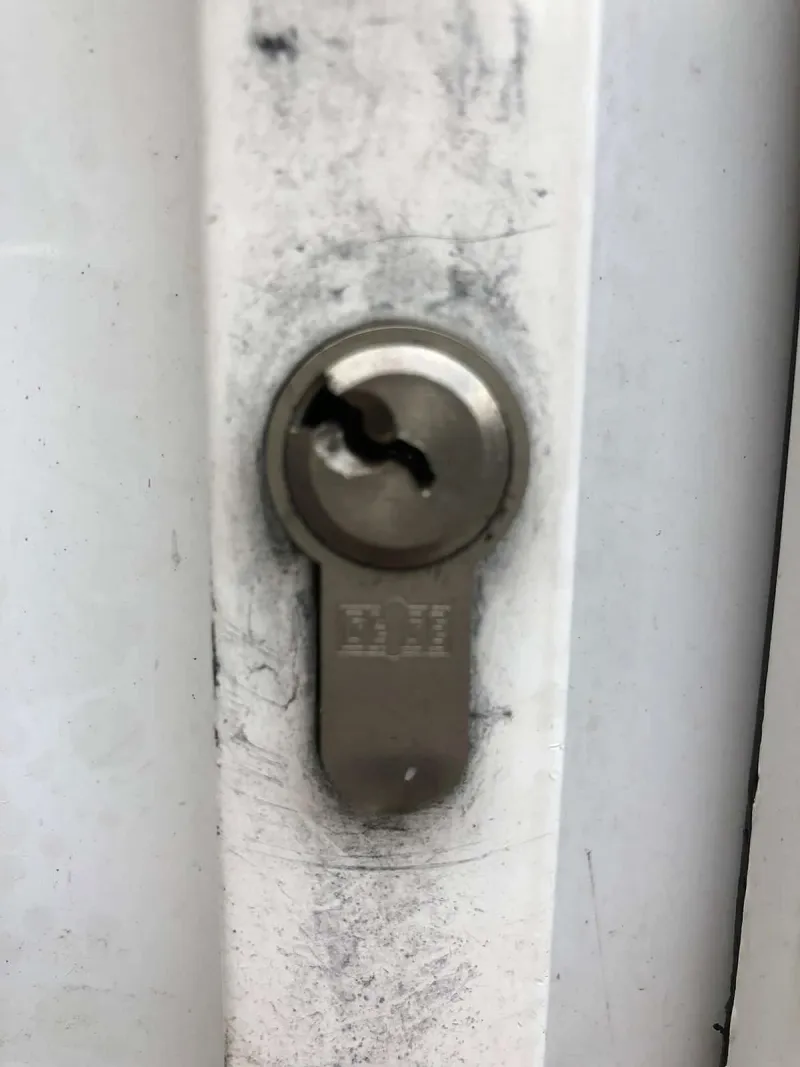
A snapped key is the moment to stop fiddling. Superglue, tweezers and the other half of the key tend to push the blade deeper, and glue in the keyway can write off a sound cylinder. Extraction with proper tools starts at £85, and in most cases the lock survives and a fresh key is cut at the door.
Keys usually snap for a reason, such as a worn blade or a dropped door straining the cylinder, and a locksmith will point out the cause so the new key does not go the same way.
Locked out at night, at the weekend or on a bank holiday
Lockouts do not keep office hours, and neither does a proper emergency locksmith. Open-in Security Services works every hour of the year, bank holidays included, and the phone is answered by the locksmith who attends rather than a switchboard. The evening and overnight rate starts at £110 against £85 by day, agreed before the van moves.
If you are waiting outside late at night, stay warm, keep your phone on and give the locksmith a landmark to find you. Across Ruislip, Harrow and the rest of West London, arrival is normally within 30–60 minutes.
Locked out of a rented flat: who pays?
The answer usually sits in your tenancy agreement. As a general rule in the UK, a lockout caused by the tenant, such as lost keys or a door pulled shut, is the tenant’s cost, while a lock that has failed through age or wear is a repair the landlord is responsible for. Many letting agents hold a spare set, though collecting it out of hours may be impossible or carry a charge.
Communal entrance doors to a block are normally the managing agent’s or freeholder’s responsibility, so ring them first. And never change a lock in a rented property without telling the landlord and providing a key.
Stopping it happening again
One lockout is bad luck. A second is a pattern, and it is cheap to break.
- Leave a spare with someone you trust. A neighbour, a relative nearby or a friend who is usually home. Not under a plant pot or the doormat, which are the first places anyone looks.
- Fit a key safe. A police-preferred key safe bolted into brickwork, out of sight of the street, gives you a spare that cannot be lost. Change the code after sharing it with a tradesperson.
- Upgrade a plain euro cylinder to anti-snap. If a cylinder is being replaced anyway, a TS007 3-star cylinder from £95 resists the snapping attack aimed at uPVC and composite doors and is what many insurers now expect. The residential locksmith page explains the standards.
- Think about the thumbturn. An inside thumbturn means you can always leave without a key, which is safer in a fire. On a door with a letterbox or glazing within reach, though, it can be turned from outside, so pair it with a letterbox guard or choose a cylinder with a key-override.
- Tame the nightlatch. A door that pulls shut on a plain nightlatch is the biggest single cause of lockouts. Use the snib to hold the latch back when you nip to the bins, fit a mortice deadlock beneath it, and build the habit of keys in hand before the door closes.
If you are on the doorstep right now, call 07904 594452. The emergency lockout page explains what happens next.
FAQ
Locked out of house what to do: Quick Answers
What should I do first if I am locked out of my house?
Check every door and window from outside without climbing, then ring anyone who might hold a spare key, such as a partner, neighbour, landlord or letting agent. If nobody can help, call a local locksmith with a real address and describe the door. Do not break glass or force the door: that costs more than a locksmith.
Can a locksmith open my door without damaging it?
Almost always. Around 95% of the lockouts Open-in Security Services attends are opened non-destructively by picking, bypassing or decoding the lock, so the existing lock keeps working. Drilling is a last resort for locks that have failed inside or are built to resist picking, and you are told before it happens.
Will a locksmith ask for proof that I live there?
Yes, and you should expect it. Once the door is open, a responsible locksmith asks for photo ID or something inside the property that ties you to the address, such as a bill, tenancy agreement or bank letter. A neighbour confirming who you are also works. It protects you as much as anyone.
How much does it cost to get back into my house?
Open-in Security Services charges from £85 for daytime non-destructive entry and from £110 in the evening or overnight, with no call-out fee. Snapped key extraction starts at £85. If a lock has to be replaced, a euro cylinder is from £65 and an anti-snap upgrade from £95, all quoted before the work.
Who pays the locksmith if I am locked out of a rented flat?
In most tenancies the tenant pays when the lockout is caused by lost keys or a door pulled shut, while the landlord is responsible when the lock has failed through wear. Check your agreement and tell your landlord or agent before any lock is changed. Keep the invoice either way.