Locksmith Guide
Will a Locksmith Drill My Lock? When Drilling Is a Last Resort, and When It Is Not
By Kenny, owner and locksmith at Open-in Security Services, Ickenham, working the same West London patch since 2006.
Published
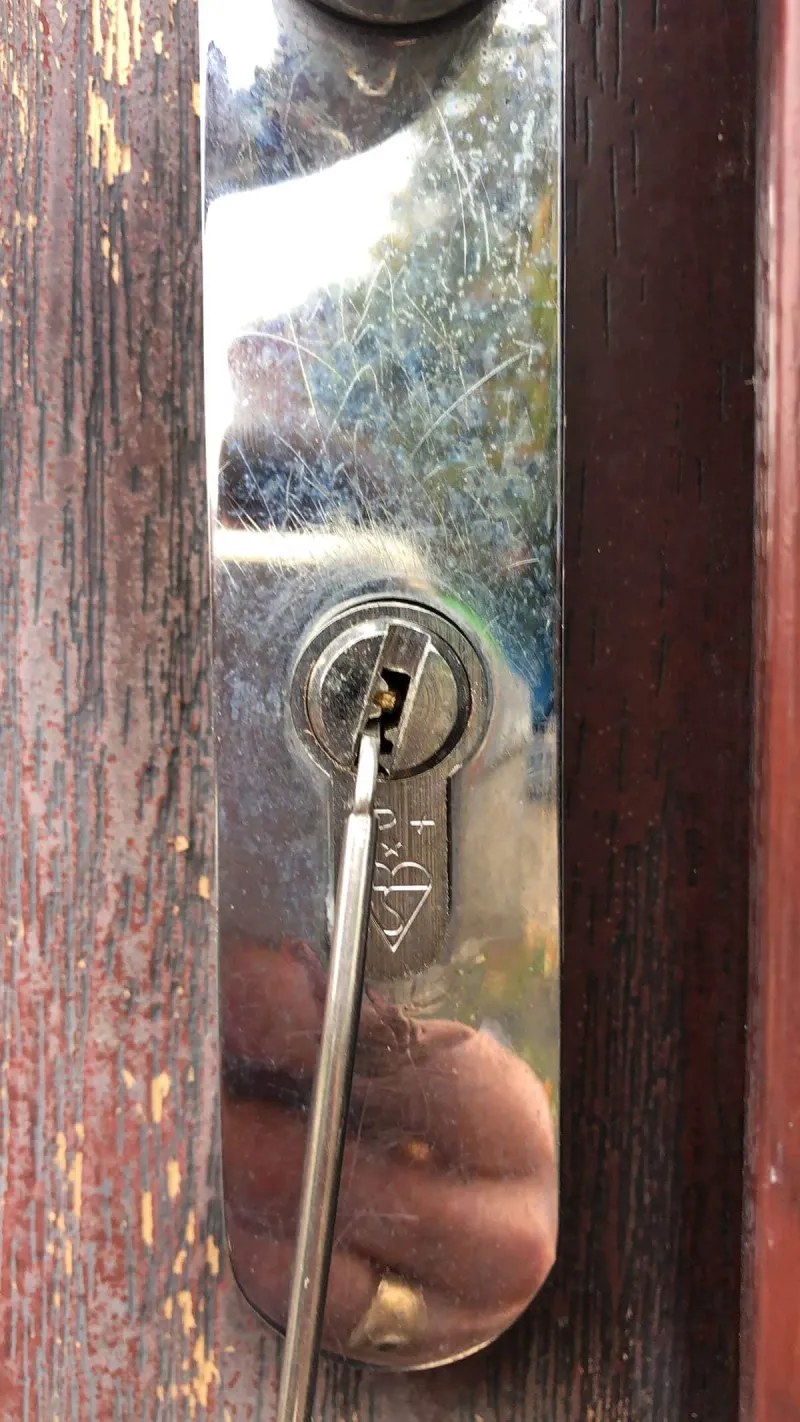
The Short Answer
Usually not. A trained locksmith opens around 95% of locked doors by picking, decoding or bypassing the lock, and the lock keeps working afterwards. Drilling is reserved for a lock that has failed inside, a mechanism jammed with the bolts thrown, or a high-security cylinder built to defeat picking. It destroys the cylinder or lock case, so a replacement is always needed and should be priced before the drill comes out: at Open-in Security Services a standard euro cylinder is from £65 and an anti-snap 3-star cylinder from £95, on top of a daytime entry from £85.
Need it sorted, not read?
Ask about will a locksmith drill my lock and get a fixed price on the call.
Call 07904 594452 WhatsApp insteadUsually not. Around 95% of the doors Open-in Security Services opens are picked, decoded or bypassed, and the lock is still in service when the engineer leaves. Drilling comes out for the small number of locks that have failed internally, jammed with their bolts thrown, or were built specifically to defeat picking, and it always means a replacement lock. The right sequence is: examine the lock, try the non-destructive route, and only then quote for drilling and a replacement, with you agreeing the figure before the drill is switched on.
What does drilling a lock actually do?
A pin-tumbler cylinder, which is what a euro cylinder and a rim nightlatch both use, holds a row of spring-loaded pins across the line where the plug turns inside the housing. The right key lifts every pin to that line so the plug can rotate. Drilling puts a hole straight through the pins along the same line, so they no longer hold the plug, and a screwdriver or a turning tool rotates the cam that throws the bolt.
A lever mortice lock is drilled differently. The drill goes through the case to reach the lever pack or the bolt stump, which is why five-lever BS3621 locks carry hardened plates in exactly those spots and why a locksmith who knows lever locks will normally pick them through the keyway instead.
In both cases the mechanism is destroyed. Nothing can be repaired afterwards; the cylinder or lock case is scrap, and the only question is which replacement goes in.
Why does a locksmith try to pick the lock first?
Because it is cheaper for you, faster in most cases, and keeps a lock you may have paid good money for. Picking a standard euro cylinder or slipping a nightlatch that has slammed on the latch is usually a matter of minutes. Decoding or picking a five-lever mortice takes longer and more skill, but it leaves a Kitemarked insurance lock in place rather than replacing it at your expense.
There is also a practical point about keys. A picked lock still works with the keys you have; a drilled lock leaves you with a new cylinder and new keys, and every spare you gave to family, a cleaner or a neighbour is now useless. When keys are lost rather than left inside, a rekey (from £45) achieves the same result as drilling and replacing, for less, with the same lock body on the door.
When is drilling genuinely the right call?
Drilling is not a failure of skill when the lock has left no other route. The situations where it is legitimate are:
- The lock has failed inside. A worn cam, a broken spring, a sheared tailpiece or a snapped lever will stop any key and any pick from working. The mechanism is already dead; drilling just gets the door open.
- A multipoint mechanism has jammed with the hooks thrown. On a uPVC or composite door the gearbox can seize in the locked position. The cylinder is often removed non-destructively first, then the gearbox is dealt with, but a badly failed case sometimes has to be drilled at the follower.
- A high-security cylinder built to resist picking. Ultion, Mul-T-Lock, ABUS Bravus, EVVA and similar use sidebars, magnetic or rotating pins and hardened anti-drill inserts. Picking can take an hour or more with no guarantee, and a planned drill along the manufacturer’s known path is the honest recommendation, with a like-for-like 3-star replacement fitted from the van.
- A key has snapped and pushed the pins out of reach. Most snapped keys are extracted, but a blade broken deep in the plug with the pins damaged can leave no picking route.
- Time genuinely matters. A child or a vulnerable person on the wrong side of the door, a cooker left on, or an animal in distress changes the calculation. Getting in fast can be worth a £65 cylinder.
What is not on that list: a plain brass euro cylinder, an unbranded rim nightlatch, a standard three-lever back door lock, or any lock the locksmith has not actually looked at.
How can you tell whether a lock will need drilling?
The keyway and the cylinder face tell most of the story before any tool comes out.
| What you see | Likely lock | Drilling likely? |
|---|---|---|
| Plain brass cylinder, maker’s name only | Standard euro cylinder | No: picked or bypassed |
| Kitemark with three stars or a Sold Secure Diamond mark | Anti-snap 3-star cylinder | Sometimes: depends on the brand and grade |
| Small oval keyhole in the door edge, long flat key | Five-lever mortice | Rarely: picked or decoded through the keyway |
| Round cylinder above a latch case, Yale-type key | Rim nightlatch | No: slipped or picked in minutes |
| Dimple key with pits on the flat, branded Ultion, Mul-T-Lock, EVVA | High-security cylinder | Often: planned drill and like-for-like replacement |
| Key turns but nothing moves, or will not turn at all | Failed mechanism or jammed gearbox | Often: the lock has already failed |
A photo of the keyhole and the door edge sent on WhatsApp to 07904 594452 is usually enough for the engineer to say which of these applies and to give a fixed price that covers both outcomes.
What should happen before anyone drills?
If a locksmith proposes drilling, this is the order of events you should expect:
- The lock is examined. Brand, grade, condition and what the key does when turned. This takes a minute and tells the engineer whether picking is realistic.
- Non-destructive entry is attempted. Picking, decoding, bypassing or slipping, depending on the lock. For a standard cylinder or nightlatch this is normally where the job ends.
- You are told why drilling is needed. A specific reason: the mechanism has failed, the gearbox is jammed, or the cylinder is a named high-security model.
- The replacement is priced. A euro cylinder from £65, an anti-snap 3-star from £95, a BS3621 deadlock from £120, on top of the entry price you already agreed. If you want to upgrade rather than go like-for-like, this is the moment to say so.
- You agree the total. Only then does the drill come out.
- The new lock is fitted and tested with its keys, and the old cylinder is removed from site, not left in the door.
If steps one and two are skipped, or the price only appears after the lock is in pieces, you are entitled to stop the job. Photographs of a drilled lock that carries no security marks are useful evidence if you later dispute the bill; the guide to spotting a genuine local locksmith covers what to do next.
Does drilling make a difference to my insurance?
Only through what goes back on the door. Insurers care about the standard of the lock fitted, not how the old one was removed. If a BS3621 deadlock or a TS007 3-star cylinder was drilled, the replacement should be the same standard or better, and a receipt naming the lock is worth keeping with the policy. Fitting a cheaper, unrated lock after drilling a rated one can leave a wooden final-exit door or a uPVC door below what the policy wording asks for. The BS3621 and home insurance guide and the anti-snap locks guide explain the marks to look for.
What Open-in Security Services does
Open-in Security Services is an independent locksmith based at 87A Long Lane, Ickenham, working within 25 miles across West London, Hertfordshire and South Bucks since 2006. The engineer, Kenny, is DBS-checked and attends every job himself. Non-destructive entry is attempted first on every lockout, the drill is a last resort with the reason and the replacement price given before it is used, and replacement cylinders and cases from Ultion, Mul-T-Lock, Yale, ERA and Union are carried in the van so a drilled lock is replaced on the same visit. Lockouts are from £85 in the day and £110 in the evening and at night, with no call-out fee. See the emergency lockout service or ring 07904 594452.
Sources
- Master Locksmiths Association, consumer advice on choosing a locksmith and non-destructive entry: locksmiths.co.uk
- Door & Hardware Federation, TS007 cylinder and hardware standard (anti-drill and anti-pick requirements): dhfonline.org.uk
- Sold Secure, independent attack testing of cylinders and locks: soldsecure.com
- Secured by Design, police-backed guidance on door and lock security standards: securedbydesign.com
FAQ
Will a locksmith drill my lock: Quick Answers
Does drilling a lock damage the door?
Done properly, no. The drill goes through the cylinder or the lock case, not the door. The hole is hidden by the new lock, so once the replacement is fitted the door looks as it did. Damage to the door itself usually means the lock was attacked in the wrong place or the door was forced rather than the lock drilled.
Can a drilled lock be repaired?
No. Drilling shears the pins or the lever pack that a key would normally move, so the mechanism can no longer be operated by any key. The cylinder or lock case has to be replaced. That is why a locksmith should attempt non-destructive entry first and tell you the replacement price before drilling.
Which locks cannot be picked and have to be drilled?
High-security cylinders such as Ultion, Mul-T-Lock, ABUS Bravus and EVVA use anti-pick pins, sidebars and hardened anti-drill inserts, so picking can take too long to be practical and drilling has to follow a planned path. Locks that have broken internally, or a multipoint mechanism jammed with the hooks thrown, can also leave no picking route. A plain euro cylinder, a rim nightlatch or a five-lever mortice should almost never need drilling.
How much does it cost if the lock has to be drilled?
The entry itself is priced as a lockout, from £85 in the day or £110 in the evening and at night with Open-in Security Services, and the replacement lock is added: a euro cylinder from £65, an anti-snap cylinder from £95, a BS3621 mortice deadlock from £120. Both figures are agreed on the phone or at the door before any drilling starts.
Is a locksmith who drills straight away a scam?
Not always, but it is the most common sign of an untrained or commission-driven operator. Reaching for the drill without examining the lock turns a low-cost entry into an entry plus a lock sale. Ask whether they will try to pick it first; a genuine locksmith will say yes without hesitation.